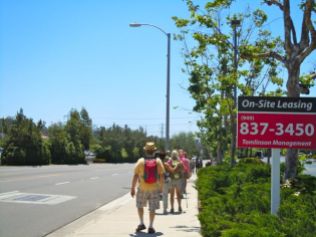
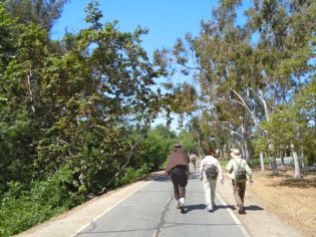
time to play in the mud…

This post is in three parts…

1. Blogging buddies.

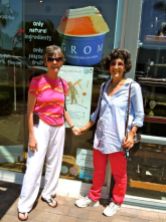
I end all my walks on the beach in Malibu with a GROM gelato, and in my posts I mention how nice it would be if you could join me there.  My blogging buddy Georgette accepted my invitation. We met last Saturday

When I saw a woman photographing the outside of GROM I knew it had to be my blogger friend and I followed her into the RadioShack next door.   My, “Hi Georgette???” was followed by lots of shrieking, and hugging, and even the guy serving her caught the excitement when we answered “Yes!” to his questions, “Are you pen-pals?” “Are you meeting for the first time?”

It was one of those occasions where, though we were strangers, we were comfortable together, though we’d never spoken to each other before, there weren’t any awkward moments of silence, though we didn’t discuss it, we both chose mango gelato.

I hope you come back soon Georgette!

2. Blogging awards.

a) – Earlier this year my blogging buddy Cathy nominated me for two awards

“THE SHINE ON AWARD highlights bloggers who are shining stars in the vast array of available blogs.”

Thank you Cathy. I’m honored to find myself among such an eminent group of bloggers :D

b) – Georgette of Georgette Sullins Blog, and Sylvia of Another Day in Paradise nominated me for the WordPress Family Award:

“reserved for folks in Cyberspace who are unceasingly kind, sympathetic, encouraging, and open to laughter – and who keep each other going by sharing, commenting, and making personal connections even though they may actually be virtual strangers.”

A sincere thank you to both of you. It’s a tremendous honor that strangers have chosen me to be part of their family. :D

I don’t like following rule so instead of passing the awards to bloggers who have declared their blogs “award free zones”,  I’d just like to extend an invitation to all my blogging buddies to join me on the beach in Malibu so I can buy you a gelato.

wordpress-family-award-1

3. Fear of mud

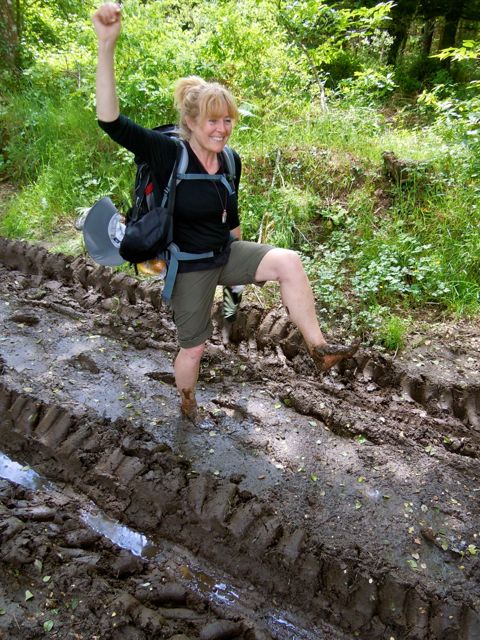
You may remember that I walked on the Camino with Sue Kenny who did the route barefoot. As you can see (in the photo below) she had enormous fun playing in the mud, something the rest of us missed entirely because we were carefully stepping in the dry patches because …. because we didn’t want to mess our boots…!

How could I have forgotten how to play in the mud?

Sue Kenny who walked barefoot along the Camino,  having so much fun playing in the mud.

Sue Kenny walked barefoot on the Camino

I’m so tired I feel as though I’m spinning round-and-round in a hamster-wheel

It’s time for me to take a break from blogging

I’ll pop over to your blogs now and then

I may even do the odd post

- I’ve so many wonderful stories in my drafts folder -

but not now

for the moment I give myself permission to play in the mud…

aah I’m already feeling better :D

Namaste.

DSCN6070

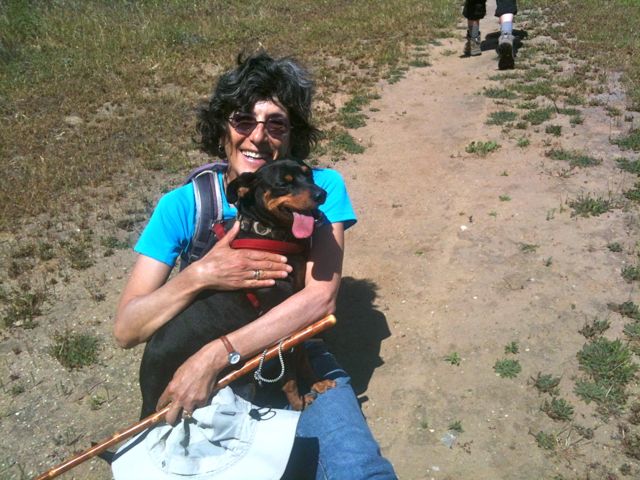
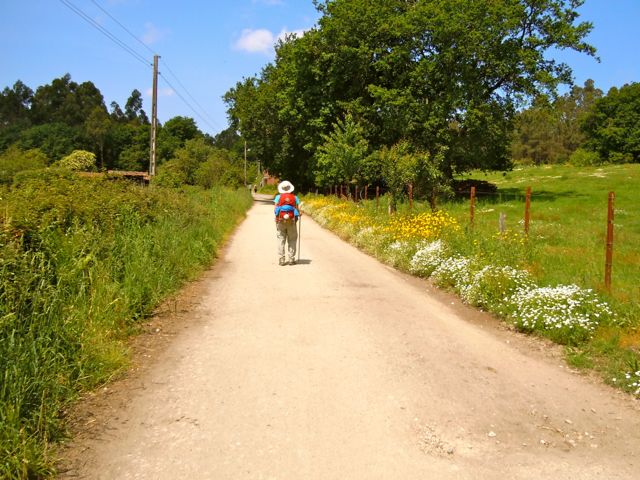
yours truly enjoying the solitude and peace along the path

Posted in Tutto va bene, Wondering | Tagged , , | 74 Comments

“T” is for Trevor from Texas

When you are sorrowful look again in your heart, and you shall see that in truth you are weeping for that which has been your delight.

- Kahlil Gibran

I’m really tired. I wasn’t going to write a post today.  I just came home from work, and quite honestly I felt like relaxing away from the computer this evening – it’s not easy working full-time and keeping up with all that blogging entails, and I’m seriously thinking I should take a break – but this story is insisting on being written, and I know it’s not just because FrizzText’s ABC photo challenge is “Tagged T” this week…

I haven’t communicated with our friends Arnie and Barbara from Dallas, Texas, in some time, and I don’t know whether today is a special date for them, but this post is about their son Trevor.

Trevor was in the final days of an eight month journey through  India and South-East Asia before coming home to start medical school in the States, when he disappeared in Nepal, near the Mt. Everest base camp.

He was last seen on July 22nd 2005 “going to take some photographs…

He was twenty-five.

.

The best way share Trevor’s story is to quote from an article Paul J. Blank wrote in the New Jersey Jewish News (December 25,  2008):

image008.jpg

*

.

*

.

*

.

*

.

*

.

 ”This summer I trekked in Nepal to the base camp of Mount Everest… 

  At 15,500 feet, I came upon an area of chortens, rocks arranged on top of each other in memorial to those who have perished while trekking or climbing the highest peaks in the world.

  There are many dangers in these activities, including disorientation, hypothermia, hunger, altitude sickness, avalanches, rockslides, falling off cliffs, and plunging into crevasses. Over the years, 185 people have lost their lives on Mount Everest.

The names of world-class climbers and renowned Sherpas were inscribed on the various chortens…

I noticed a chorten that included a Jewish star as well as some Hebrew lettering. The climbing victim was identified as Trevor Eric Stokol from Dallas. According to the dates that were given, he died on July 22, 2005, at the age of 25.

Knowing nothing about Stokol except for the information on the chorten, I nevertheless felt compelled to honor his memory in accordance with Jewish ritual. I reasoned that this was not a location where friends and family were likely to visit, or other Jewish people would pass by. I put on a kipa, said a short prayer, and placed a stone on the chorten, as is traditional to do on tombstones at Jewish cemeteries.

After coming off the mountain, I researched the circumstances of Stokol’s death.

On the path to Everest base camp, he wandered off from his group, probably to get a better picture of the summit. When he did not rejoin the group, fellow hikers and Sherpas began an extensive search. The U.S. Embassy announced the disappearance, and Stokol’s family flew to Nepal, overseeing a search by foot and in helicopters that lasted eight days.

Stokol’s body was never recovered. Most probably he was killed by an avalanche that had been reported in that area on the same day. The family called off the search and returned to Texas to begin the mourning period. The following year, they returned to Nepal to erect the chorten, putting objects pertaining to Trevor’s life within the rock structure.

Stokol was an exceptional young man. He was a graduate of Emory University. He was an excellent student, very well-read, and a passionate writer, as can be seen by his journal entries…”

Click here for the complete article.

727

.

.

*

- R.I.P Trevor -

- You are not forgotten -

*

.

For more information on Trevor’s tragic disappearance click here

Posted in Not America, The Natural World, Wandering, Wondering | Tagged , , | 57 Comments

Santiago de Compostela in Southern California

It is with deep sadness that I share the sad news that Wolfgang, my pilgrim friend who walked the Camino after he was given six months to live, passed away on Friday night.

His friend Kurt sent me an email early Saturday morning:

my friend Wolfgang has reached his “fin de Camino” and died in the arms of his wife Bärbel last night…

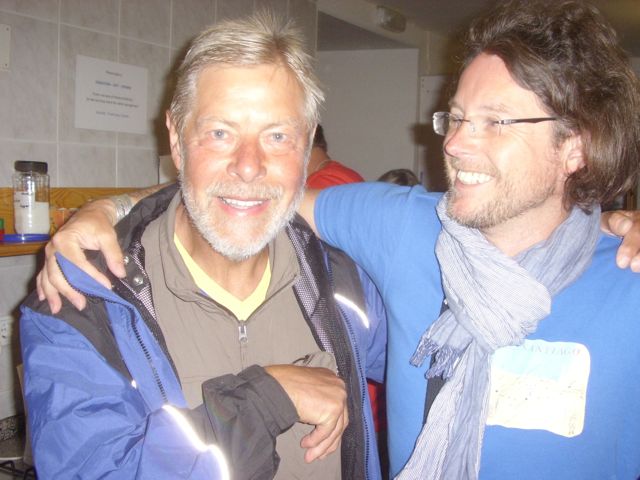
Kurt wanted me to share this photo of him and Wolfgang:

Taken on May 21, 2012, the morning we started walking together on the Camino… less than a year ago.

R.I.P dear pilgrim Wolfgang.

Kurt and Wolfgang

Kurt and Wolfgang

Coincidence or Synchronicity?

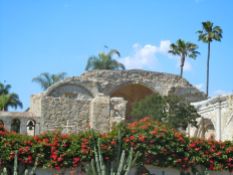
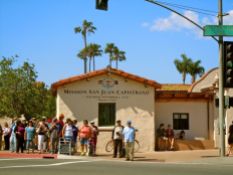
On Saturday morning Mr F and I joined a group from the Southern California Chapter of the American Friends of the Camino on a hike which started at Santiago de Compostela Catholic Church in Lake Forest (about sixty miles south of Los Angeles) and ended at Mission San Juan Capistrano twelve miles away.

Santiago de Compostela Church in Lake Forest, California

Santiago de Compostela Catholic Church in Lake Forest, California

Some background info on the Camino:

The Camino de Santiago (“The Way of Saint James,”) follows a thousand-year pilgrimage route west across northern Spain to the Cathedral of Santiago de Compostela where “it is thought” the remains of Jesus’s Apostle Saint James (Santiago) are buried.

A hermit who followed a star (stela) shining on a particular spot in an open field (Compo) found what was believed to be the coffin of St. James buried there, and a shrine was built on the site.

In 1189 Pope Alexander III made Santiago the patron saint of Spain, and declared Santiago de Compostela a Holy City (together with Rome and Jerusalem), which meant anyone undertaking a pilgrimage to Santiago would be pardoned from their sins.

Thus Pilgrimages (from the Latin ‘pereger‘ for “one who traverses a region”) to Santiago de Compostela became very popular in the Middle Ages.

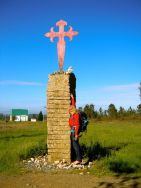
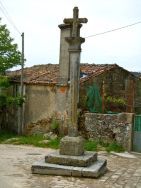
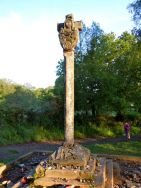
Granite crosses were placed along the many pathways to guide the way.

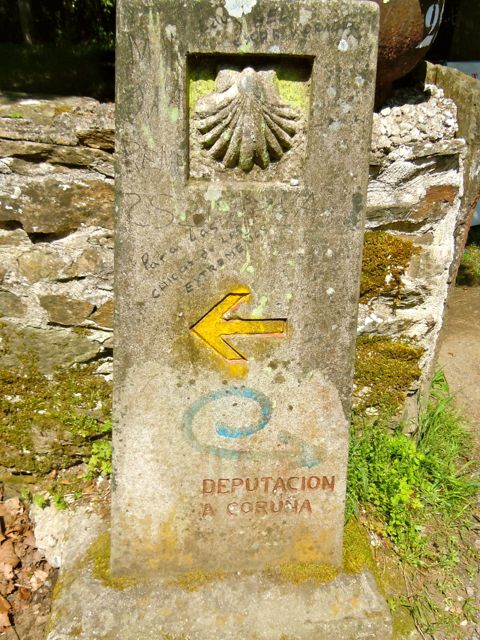
Hundreds of years later stones inlaid with scallop shells, and the yellow arrow marked the route.

We can thank Don Elias Sampedro (1929-1989) a parish priest living along the Camino for thinking of marking the route with the yellow arrows.

Camino kilometer marker and yellow arrow

the shell and yellow arrow which mark the path along the Camino

The parish church in Southern California was named after the Spanish shrine in 1979.        I didn’t photograph inside the church out of respect because there was a funeral service while we were there. Another coincidence?

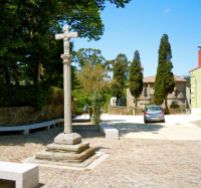
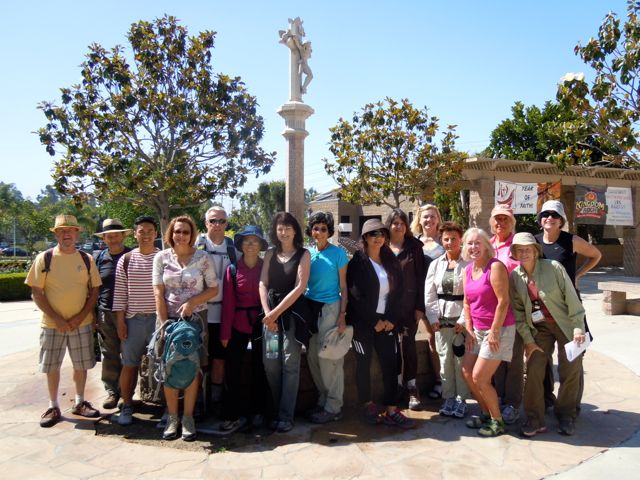
The first Galician Granite Pilgrimage Cross in the United States, which stands outside the Californian church in the center of the fountain, was a gift from the mother church in Spain.

we walked with some Pilgrims from the Southern Californian

Our group of pilgrims at the starting point in front of the cross.

I walked for Wolfgang.

Posted in America, Photography, Wondering | Tagged , , | 56 Comments

no place for sissies in the Wild West

“There is certain relief in change, even though it be from bad to worse! As I have often found in traveling in a stagecoach, that it is often a comfort to shift one’s position, and be bruised in a new place”

- Washington Irving (American author of Rip Van Winkle). 1783-1859

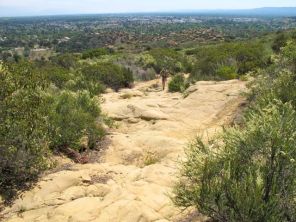
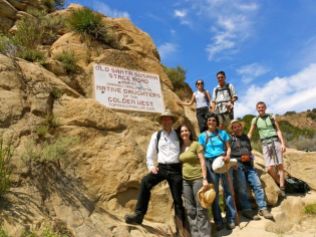
On April 6, our little group of hikers walked under a scorching sun in the rugged Santa Susana State Historic Park – in the northwest San Fernando Valley -  and narrowly escaped rattlesnakes, and poison oak.

Full disclosure: yours truly forgot her camera. My thanks to Edith de Guzman, Jolly de Guzman, Chris Imhoff and Mr F who shared their photos with me.

Photo credit Jolly de Guzman

Photo credit Jolly de Guzman

Note:

- Three Californian Indian tribes lived here before the Europeans arrived:

  • Chumash (sea- shell or bead people)to the west
  • Tongva (people of the earth) to the east
  • Tataviam (people facing the sun) to the north

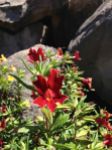
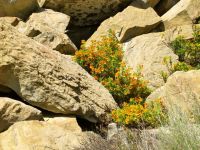
- Though the wildflowers are sparse this spring, the drought tolerant Sticky Monkey Flower (Mimulus aurantiacus),

an evergreen shrub with deep-green, sticky leaves and orange/yellow/red flowers which flowers from March to June

was blooming on the dry hillsides.

Native Americans used the crushed leaves as a soothing poultice for minor burns and skin irritations, and the roots to treat fever, and diarrhea.

Even if you’ve never been to LA County most of you would recognize the scenic beauty and unique rock outcrops of the Santa Susana Mountains because you’ve seen them in thousands of Wild West movies and TV shows.

photo credit Chris Imhoff

photo credit Chris Imhoff

photo credit Edith de Guzman

photo credit Edith de Guzman

In the mid 1800′s the lack of an accessible route over the Simi Hills – in the western San Fernando Valley – was one of the major obstacles to traveling between Los Angeles and San Francisco.

photo credit Mr F

photo credit Mr F

In 1859, the California Legislature approved $15,000 to improve an old wagon road through the Santa Susana Pass.

The Old Santa Susana Stage Road was carved out of the rock face of the hills. The steepest stretch, “a peril to man and beast,” was known as Devil’s Slide

photo credit Mr F

Devil’s Slide – photo credit Mr F


Only highly skilled drivers could keep control of the stagecoach and their horses on this hair-raising segment of the route:

  • Passengers had to walk down, carrying rocks to help block the wheels
  • The horses were blindfolded before they’d go down the pass

We could see deep ruts made by the wagon wheels in the rocks on the sides

the old Stagecoach Route

Devil’s Slide  (photo credit Chris Imhoff)

The Old Santa Susana Stage Road was part of the Overland Stage Route between Los Angeles and San Francisco via Santa Barbara, from April 6, 1861 until the opening of the railway line in 1876.

Coincidentally we’d walked on the 152nd anniversary of the first Mail Stage run.

viz Wikipedia

A stagecoach is a strongly sprung covered wagon for passengers and goods, drawn by four horses. Widely used before the introduction of railway transport, it made regular trips between stages or stations, which were places of rest provided for stagecoach travelers.

stagecoach

  • The stagecoach driver managed the teams of horses, and an armed guard sat next to him to protect the valuables in the strong box.
  • By 1866 Wells Fargo held the monopoly of long-distance overland stagecoach and mail service with an intricate web of stations, horses, men and stage coaches.

Although movies make stagecoach travel seem like a comfortable, fun way to travel, Mark Twain’s 1861 memoir Riding The Overland Stage” describes otherwise:

passengers crammed together with mailbags, jostled by every bump, breathing dust, and at the mercy of Mother Nature.

Traveling by stagecoach you’d encounter harsh weather, hostile Indians, as well as outlaws.

Between 1870 and 1884 Wells Fargo recorded 313 stagecoach robberies and 34 attempted holdups (with a loss of $405,000) in the gold regions of California and South Dakota.

Many travelers suffered from motion sickness because the coaches swayed from side to side, and when the coach traveled over a section of rough road the passengers would bounce on the hard seats, and very often hit their heads on the roof.

You couldn’t be a “sissy”.

The Stagecoach at the Autrey Museum

I photographed this beautifully restored Stagecoach at the Autry Museum in Los Angeles

Somehow nine passengers would be crammed inside the coach on three bench seats:

  • each of the benches held three people
  • back and middle rows faced forward, and the first row faced backwards.
  • Those in the first and middle rows had to ride with their knees dovetailed.
  • The center seat only had a leather strap to support the back
  • The top held the luggage – each passenger was restricted to 25 lbs  – or as many as twelve passengers
  • Travelers rode with baggage on their laps and often had mail pouches beneath their feet.

Passengers had to get out and walk (in boiling sun, or snow storm) if the coach needed to be lightened, or when the driver needed help pushing it up a hill.

The stagecoaches traveled at breakneck speed twenty-four hours a day – covering about sixty or seventy miles a day – stopping just to change horses, which gave travelers their only opportunity to use the facilities and to gulp down a quick meal …

Mark Twain described the beverage he was offered by one station keeper:

“It purported to be tea, but there was too much dish-rag, and sand, and old bacon-rind in it to deceive the intelligent traveler. He had no sugar and no milk–nor even a spoon to stir the ingredients with.”

If a traveler got off the stage to rest, she could easily be stuck there for a week or even longer if the next stage had no available seats.

each passenger was allowed 25 lbs but those leather suitcases were so heavy

each passenger had a  25 lb weight restriction

Although this post is much too long, I have to share this list of rules Wells Fargo posted in their stagecoaches:

  • Abstinence from liquor is requested, but if you must drink share the bottle. To do otherwise makes you appear selfish and unneighborly.
  • If ladies are present, gentlemen are urged to forgo smoking cigars and pipes as the odor of same is repugnant to the gentler sex. Chewing tobacco is permitted, but spit with the wind, not against it.
  • Gentlemen must refrain from the use of rough language in the presence of ladies and children.
  • Buffalo robes are provided for your comfort in cold weather. Hogging robes will not be tolerated and the offender will be made to ride with the driver.
  • Don’t snore loudly while sleeping or use your fellow passenger’s shoulder for a pillow; he or she may not understand and friction may result.
  • Firearms may be kept on your person for use in emergencies. Do not fire them for pleasure or shoot at wild animals as the sound riles the horses.
  • In the event of runaway horses remain calm. Leaping from the coach in panic will leave you injured, at the mercy of the elements, hostile Indians and hungry coyotes.
  • Forbidden topics of conversation are: stagecoach robberies and Indian uprisings.
  • Gents guilty of unchivalrous behavior toward lady passengers will be put off the stage. It’s a long walk back. A word to the wise is sufficient

The Old Stagecoach Trail and the Old Santa Susana Stage Road are listed on the National Register of Historic Places.

This post is part of FrizzText’s A-Z photo challenge “tagged S” this week

Posted in America, Photography, The Natural World, Tutto va bene | Tagged , , | 62 Comments

Summer’s arrived over here

Spring is the time when blossoms, tulips and daffodils fill our gardens.

How do you define summer?

  1. you wear a tee-shirt and shorts
  2. sweat drips down your back after a walk to the corner
  3. your swim suit and towel are always wet
  4. you have to switch on the AC in your car
  5. you buy iced lattes at Starbucks
  6. picnics
  7. peaches and cherries at your local farmer’s market

I think it’s all the above. What do you think?

You may be interested to learn that I was able to answer in the affirmative for all the above items this week [It was 85 degrees today, so I went swimming] and after seeing the bounty at our local farmer’s market last Sunday, I feel I can say summer has arrived in Southern California.

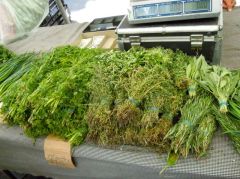
Come let me show you the farmer’s market …

Studio City farmer's market

Studio City farmer’s market Sunday April 28

I bought a bunch of sweet peas at the market. Their scent takes me right back to my childhood home where they grew on the verandah wall each spring, and the fragrance from multiple arrangements of freshly cut sweet peas and roses filled the house.

I don’t get excited to see apples or pears in the fall (do you?), but I can act like a kid when I see the first peaches and plums, cherries and apricots.

Strawberries and citrus don’t make my heart sing

Cherries and peaches do :D

Three kinds of asparagus, a large variety of squash, and squash blossoms

If you’ve never eaten dandelions this is an excellent time of year to try them.
They are rich in vitamins and minerals. Their bitter flavor stimulates digestive function, from the stomach down to the intestines, including stimulating bile production in the liver.
DSCN3102

Click here for a great recipe of dandelions and shiitake mushrooms.

We bought eggs “from the happiest chickens in town“, and tried a bottle of Rebecca Smith‘s Cold Brew Coffee

In the cold brew process we grind the beans, soak them in water for 18-24 hours, then filter out the beans to get the coffee concentrate.

To prepare: mix 1 part coffee to 2 parts milk, add some ice, and voilà, a cup of iced coffee that’s not bad.  I’ve had some every afternoon this week. :D

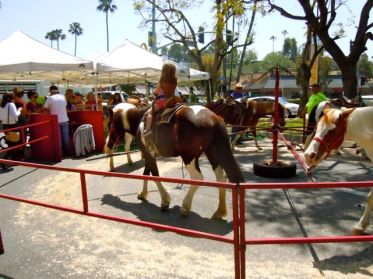
At the Studio City farmer’s market kids ride a merry-go-round pulled by real ponies… and  last weekend Snow White popped in.

 I took all the photos last Sunday

NOTE:

It’s not just hot, its dry, and unfortunately there’s a serious fire burning just north of the city.

The Springs fire, which started Thursday around 6:30 a.m., has scorched more than 18,000 acres between Pacific Coast Highway and the 101 Freeway.

Winds continue to push the flames southwest when single-digit humidity, temperatures in the high 90s and wind gusts of more than 40 mph fed the fire that consumed dry old brush that hasn’t burned in over 20 years.

Posted in America, Tutto va bene | Tagged , | 60 Comments

11:11

A few months ago my blogging buddy, Georgette, at Georgette Sullins’s Blog tagged me with a blogging challenge, which came with a set of rules

1. Post these rules.
2. Post a photo of yourself and eleven random facts about you.
3. Answer the questions given to you in the tagger’s post.
4. Create eleven new questions and tag new people to answer them.
5. Go to their blog/twitter and let them know they have been tagged.

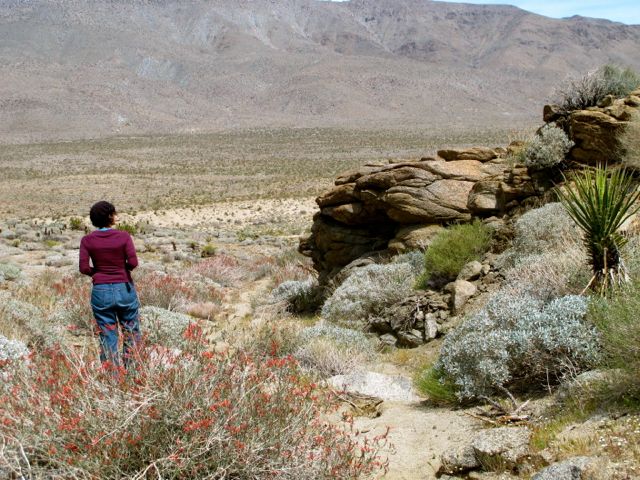
Yours truly in Anza Borrego Desert State Park. March 2013.

Yours truly in Anza Borrego Desert State Park. March 2013. (photo credit Mr F.)

I don’t think anyone is interested to know

  • my favorite meal of the day
  • or which State I’d like to visit

though I hope you share my enthusiasm that New Zealand and France have both recently legalized gay marriage (while the United States Supreme Court is still dithering!)

Anyway as it’s my derriere that sits in the editor’s chair over here at Wondering Rose, this is one place I don’t have to follow any rules, I’m  free to interpret the challenge any way I like.

Firstly, I always see the number 11:11 on digital clocks.

I hear your “What’s the big deal? In a twenty-four hour clock numbers will come round twice each day!” True, but when you see the same time consistently you begin to wonder what it means, and you’d also ask, Why don’t I see 12:12 or 3:33 or 5:55?

An internet-search led me to:

a site called Maya 2012,  with an explanation that I’m not alone,

there’s a global phenomenon perplexing people of all ages who see 11:11 on a daily basis.

It’s not as though you are constantly waiting for this magical number to appear, it just does.

11:11 signifies your spiritual awakening,

“as this number seems to be predominantly noticed by those who have begun their spiritual journeys.”

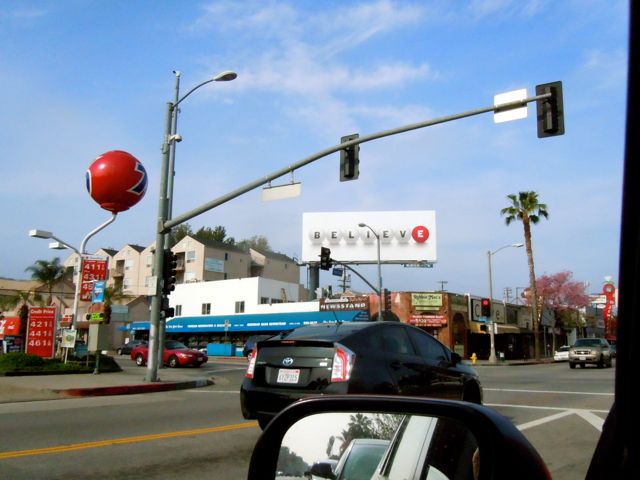
driving to work at Ventura and Beverly Glen

At the corner of Ventura and Beverly Glen in L.A.

It took a long time to wake me up and get my attention. I’m now ready to receive my truth.

I wonder how many of you also see repetitive numbers?

DSCN3635

she loved her wallet

For the second part of this challenge:

eleven observations from my Museum cash register 

with my sincere thanks to the hundreds of people I’ve had the pleasure of meeting each day for the past twelve years

:D

.

1  Photo I.D’s

Very few people look like the person in their driver’s license photo,  a negligible number of women have the same hair style or hair color,  and sometimes you can see the same smile, or freckles (though it could be their sibling).

* * * *  *

2. “Tax en plus Monsieur!”

Foreign tourists always think I’m stealing and get angry when I include tax in the total.  “Why are you asking $3 when the price says $2.75?” they demand.

In the United States and Canada tax is added at the end, everywhere else in the world it’s included in the price.

* * * *  *

3. Where do you keep your money?

Don’t assume folks keep their bills neatly folded in their wallets like the woman above.  You’d be amazed how many women simply chuck their money into their purses, and tell me “I know it’s in there… Somewhere…!”

Most children visiting the museum with a school group pay with wads of crumpled, wet, sticky money. Yuk!

* * * *  *

DSCN8715

Asia and Dani are from Los Angeles

4. Fashion:

Can you explain why someone would walk around with this written on his tee-shirt?

My parents said I could be
anything
so I became an asshole

* * * *  *

5. Culture:

Man to a teenage boy as they walked into the gallery:

“You’re gonna go in there and get some culture! God dammit!”

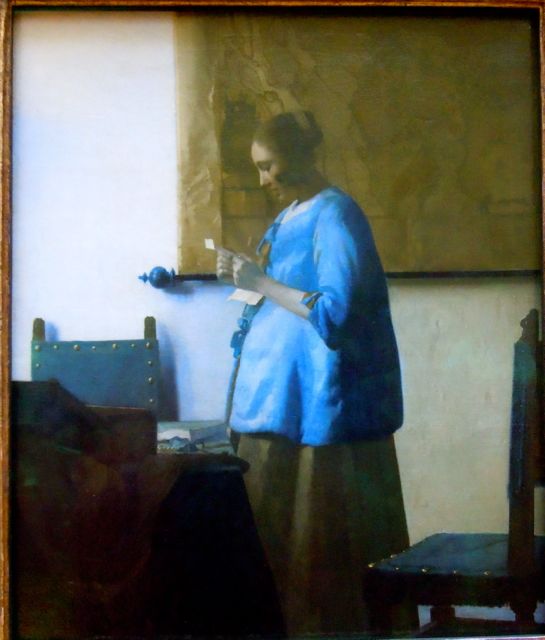
Vermeer's girl reading a letter

Vermeer’s “Woman reading a letter” 1662 (on loan from the Rijks Museum in Amsterdam)

6. “Are these paintings real?

I’ve been asked that more than once. I’d love to say the originals are in my house and the Museum hangs up fakes.

* * * *  *

The screaming Scream

The Screaming Scream

7.

People forget the cashier is human:

“Oh god this thing would drive me nuts if I had it in my home,” said the middle-aged-woman to her friend.

And she pressed the “Screaming Scream” three times.

I agree with her. I think it sounds like a dentist’s drill.

Thankfully her friend didn’t need to  press it too.

.

8. Questions:

“Do you work here? Can I ask you a question? a little old lady asked me, “Last time I was in Jerusalem I went on a walking tour and we saw two cemeteries. Could you explain the difference to me?”

* * * *  *

9.  Plastic bags

A man from San Francisco told me this story: “I was in Hermes recently. The woman in the line ahead of me spent about $10,000 on her purchases, but refused to pay the extra ten cents for a plastic bag!”

* * * *  *

10  I met these girls at my cash register this year

  • A three-year-old called “Tiger Lilly”
  • a twelve-year old called “Genesis”
  • an eleven-year old called “Malaya”
  • a teenager called Carnina.
    “It was supposed to be Carina but my mother made a spelling mistake when she filled out the form.”

* * * *  *

11.  Food.

A woman from Wisconsin told me: “If you buy cheese curds from Wisconsin they must be squeaky or they aren’t fresh. And you must eat them warm.”

DSCN8074

* * * *  *

According to the rules I must now tag someone.

By a lovely coincidence, FrizzText’s A-Z challenge this week is “tagged R“.  “R” is for me Rosie.

Image 6

in my happy place

With thanks to Georgette.

Posted in Museum Musings, Photography, Tutto va bene, Wondering | Tagged , , | 66 Comments

“My Lady Is Compared to a Young Tree” by Vachel Lindsay

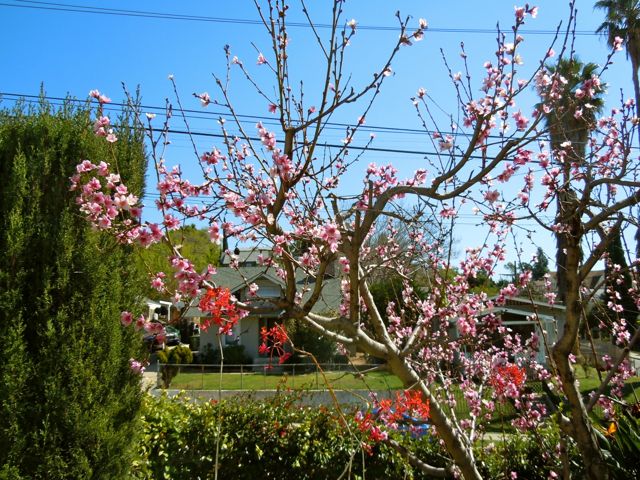
DSCN4331

April is National Poetry month. I share a poem written by an American poet, Nicholas Vachel Lindsay

My Lady Is Compared to a Young Tree – by Vachel Lindsay

When I see a young tree
In its white beginning,
With white leaves
And white buds
Barely tipped with green,
In the April weather,
In the weeping sunshine–
Then I see my lady,
My democratic queen,
Standing free and equal
With the youngest woodland sapling
Swaying, singing in the wind,
Delicate and white:
Soul so near to blossom,
Fragile, strong as death;
A kiss from far-off Eden,
A flash of Judgment’s trumpet–
April’s breath.

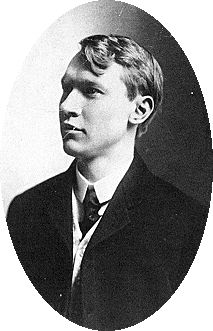
vach1

Vachel Lindsay was born in Illinois in 1879 and died in 1931.

The second of six children and the only son,  his parents wanted him to become a doctor like his father.

While studying at Hiram College in Ohio he was trained in oratory, a skill for which he would later become known throughout the United States and England.

Lindsay is considered the father of modern singing poetry.

His style of chanting verses helped keep appreciation for poetry as a spoken art alive in the American Midwest.

One of Lindsay’s most famous poems, the title piece in “‘The Congo’ and Other Poems, has a rhythmic structure based on African-American speech rhythms and jazz.

Though Lindsay believed jazz was a decadent art form, he used it in his poems to faithfully relate the regional lore of the South.

He recited the poem in a variety of voices ranging from a loud, deep bass to a whisper.”

.

.

If you’re interested to know more about Vachel Lindsay click here

Posted in Poetry | Tagged , | 41 Comments